How to Parent a Teenager with Anxiety (Guide for New Jersey Families)
If your teenager has been withdrawing from friends, struggling with sleep, or complaining about stomachaches before school, you're not imagining things-and you're not alone. Teen anxiety is one of the most common mental health challenges families across New Jersey face today, and the good news is that it's highly treatable. This guide walks you through what to look for, what to say, and when to seek professional help.
Key Takeaways
Anxiety in teenagers is far more common than most parents realize, and it responds well to the right combination of home strategies and professional support. You don't need to eliminate your child's anxiety-you need to help them learn to move through it.
- About 20% of U.S. teens report anxiety symptoms, and one in four teens has some form of anxiety disorder. Your teen is not "broken"-they're part of a widespread challenge.
- Start with validation and simple tools: the 3-3-3 grounding rule, deep breathing exercises, and predictable daily routines give your anxious teen something concrete to use when anxiety spikes.
- Avoid accommodating every avoidance request. Gently encouraging your teen to face feared situations in small steps builds resilience over time.
- Watch for warning signs that anxiety has crossed into an anxiety disorder: school refusal, dropping grades, panic attacks, persistent chest pain, or withdrawing from activities they used to love.
- Parents in Sparta and across New Jersey can access fast, personalized psychiatric care through Restore Health Sparta's concierge membership-comprehensive evaluations, medication management, and coordination with therapists and schools.

Understanding Teen Anxiety vs. Typical Stress
Every teenager feels stress before a big exam or an important sporting event. That's a normal part of development. Anxiety becomes something different when the worry is constant, out of proportion to the situation, and hard for your teen to control-even when they know logically that things are probably fine.
Here's what separates typical stress from clinical anxiety:
- Stress is tied to a specific event (a test at Sparta High School, a game, a presentation) and fades once the event passes.
- Anxiety persists for weeks or months, shows up across multiple settings, and interferes with sleep, friendships, grades, or family life.
- An anxious teen might dread school every single morning-not just before a quiz-or refuse social gatherings entirely because of overwhelming "what if" thoughts.
Around 16.1% of U.S. adolescents aged 12–17 have a diagnosed anxiety condition. Anxiety disorders are more common in girls than boys-in New Jersey specifically, roughly 41.9% of female middle schoolers reported feeling anxious or on edge in recent surveys compared to about 17.2% of males. These numbers reflect real life in communities like Sparta, Newton, and Jefferson, where academic pressure, social media comparison, and post-pandemic adjustment continue to shape young people's mental health.
Anxiety becomes an anxiety disorder when symptoms last weeks or months and disrupt daily functioning-school performance, friendships, sleep, or family harmony.
Common Anxiety Symptoms in Teens You Might Notice at Home
Anxious teens rarely walk up and say, "I have anxiety." Instead, you'll notice shifts in how they act, feel, and physically respond to daily life.
Emotional signs:
- Irritability that seems out of proportion
- Constant "what if" worries about grades, safety, or the future
- Perfectionism about schoolwork or sports performance
- Reassurance seeking-asking the same questions over and over
Physical symptoms:
- Common physical symptoms of anxiety include stomachaches and headaches, especially on school mornings
- Chest pain or tightness, racing heart, nausea
- Muscle tension, difficulty concentrating, sleep problems
- Frequent "mystery" illnesses that don't have a medical cause
Behavioral signs:
- Anxiety can lead to avoidance of school or social situations
- Dropping hobbies, quitting teams, refusing activities they used to enjoy
- Spending excessive time alone or online
- Irritability and changes in sleep habits are often the first things parents notice
These anxiety symptoms can overlap with depression or ADHD, which is why a thorough evaluation from a mental health professional can clarify what's actually going on and prevent misdiagnosis.
Why Your Teen May Feel Anxious: Real-World Triggers in New Jersey Teens
Anxiety in children and teenagers typically arises from a combination of factors-not a single cause. Anxiety disorders can be caused by genetic predisposition, meaning if you or your partner has struggled with anxiety, your teen may be more vulnerable. Temperament, brain chemistry, and family patterns all play a role.
Stressful life events can trigger anxiety disorders in teens. In New Jersey, common triggers include AP and honors course loads, SAT/ACT prep pressure, competitive travel sports, and the weight of college admissions. Many teens are juggling demanding schedules that leave little room for downtime or genuine rest.
Social media use is linked to increased anxiety in teens. CDC data shows that teens with four or more hours of daily screen time are roughly twice as likely to report anxiety symptoms compared to those with less screen time. The curated, comparison-driven nature of social media feeds fear of missing out, social rejection, and cyberbullying.
Local stressors matter too. Teens in suburban towns like Sparta deal with long commutes, driving anxiety on busy New Jersey roads (especially in winter), part-time jobs, and the pressure to "do it all." School safety drills, while necessary, can heighten anxiety in young people who are already prone to worry.
Anxious parents can unintentionally increase their child's anxiety through overprotection, catastrophizing, or modeling avoidance. This isn't about blame-it's about awareness. Once parents recognize these patterns, they can start shifting them, which benefits the entire family.
Start Here: How to Talk to Your Anxious Teen About Anxiety
You don't need a perfect script. You just need to show up, stay calm, and listen.
Encouraging open communication reduces pressure during conversations with teenagers. Try conversation starters that invite sharing without leading: "How have things been feeling at school lately?" works better than "Are you anxious about school again?" Pick low-pressure moments-a car ride, a walk, making dinner together-when your teen isn't on the spot.
Validation of feelings is crucial for anxious teens' support. Phrases like "I can see this feels really scary" paired with "and I believe you can handle it" respect your teen's experience without empowering the anxiety narrative. Avoid minimizing ("You're overreacting") or over-reassuring ("Nothing bad will ever happen"). Neither helps-and both can shut down future conversations.
Using active listening techniques fosters trust and understanding in communication. That means paying attention fully, reflecting back what you hear, and resisting the urge to immediately problem solve. Building a strong relationship with an anxious teenager requires patience and empathy-it won't happen in one conversation.
Set up regular check-ins so talking about feelings becomes routine, not crisis-driven. A weekly walk, coffee after dinner, or even a brief "How's your week going?" text thread can keep the door open.
Teaching Practical Coping Tools: Grounding, Deep Breathing, and the 3-3-3 Rule
Telling an anxious teen to "just calm down" doesn't work. They need specific, repeatable coping strategies they can reach for when anxiety spikes-during a panic attack, before a presentation, or in the middle of the night.
The 3-3-3 Rule: The 3-3-3 rule helps ground teens during anxiety attacks. Here's how it works:
- Name three things you can see
- Identify three sounds you can hear
- Move three body parts (wiggle fingers, roll ankles, shrug shoulders)
This grounding technique pulls attention into the present moment and away from catastrophic thoughts, interrupting the anxiety cycle.
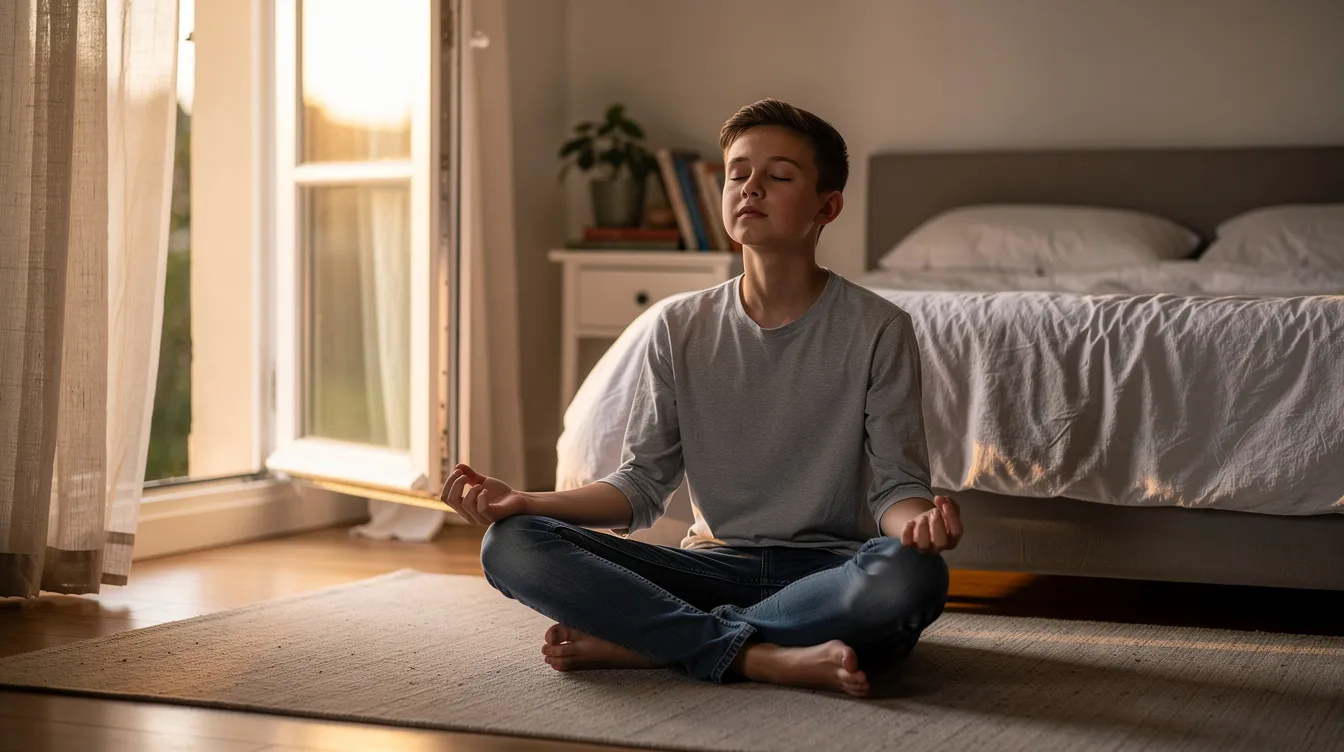
Deep Breathing: Practice a simple pattern with your teen: inhale for 4 counts, hold for 2–4 counts, exhale for 6–8 counts. Taking deep breaths activates the parasympathetic nervous system and signals safety to the brain. Try it at bedtime, in the car before school, or outside the exam room. Practicing relaxation techniques can calm the nervous system and reduce anxiety over time.
Additional tools:
- Splashing cold water on hands or face
- Holding an ice cube to create a physical sensation that redirects attention
- Counting backwards by 7s
- Focusing on feet on the floor to anchor attention away from feared situations
Parents should model these coping skills out loud. Saying "I'm feeling tense-I'm going to take some deep breaths" shows your teen that managing anxious feelings is a normal, healthy behavior, not something reserved for therapy sessions.
Step by Step: Helping Your Teen Face Feared Situations (Without Forcing)
Avoidance can inadvertently strengthen anxiety symptoms in teenagers. Every time a teen skips the social gathering, stays home from school, or lets a parent make the phone call for them, the brain learns that the feared situation truly was dangerous-and the anxiety grows stronger.
Encouraging gradual exposure to fears helps reduce anxiety over time. This doesn't mean throwing your teen into the deep end. It means building a "ladder" of challenges ranked from least to most anxiety-provoking, and climbing it together.
Example ladder for social anxiety:
- Text a classmate about homework
- Say hello to that classmate in the hallway
- Sit with a small group at lunch
- Attend a friend's gathering for 30 minutes
- Stay for an entire social event
Helping teenagers break down tasks into smaller steps can reduce overwhelm. Collaborate with your teen on this-let them choose the pace. Reward effort, not perfection. Celebrate the fact that they showed up, even if they left early.
The key balance: don't accommodate every avoidance request (doing presentations for them, always calling in sick), but don't force exposures that feel life threatening or overwhelming. For some teens with intense anxiety or frequent panic attacks, a therapist or psychiatrist should guide the exposure process to ensure it's safe and productive.
Creating an Anxiety-Reducing Home Environment
Home routines and atmosphere can either amplify anxiety or provide a foundation of calm. Predictable routines can reduce anxiety triggers in teens-when the environment feels stable, the nervous system can settle.
Practical changes:
- Consistent bedtimes and wake times, even on weekends
- Screen time boundaries-especially limiting social media before bed
- Family meals when possible, even a few times per week
- Designated homework blocks and built-in downtime
- A quiet homework space with dimmer lights in the evening
Maintain a calm emotional climate. Minimizing yelling, constant crisis talk, and high-pressure conversations about grades or college around your anxious teen makes a real difference. Maintaining a calm presence supports teenagers during heightened anxiety.
Reduce unnecessary triggers: turn off 24/7 news, plan ahead for stressful situations like the start of the school year, and manage conversations about college or performance privately rather than at the dinner table.
Encouraging hobbies can help build a teen's self-esteem. Whether it's art, music, cooking, or hiking, activities that aren't graded or scored offer a sense of mastery without pressure. Regular exercise and physical activity have strong evidence for lowering baseline anxiety.
A healthy diet-consistent meals, limited caffeine, adequate hydration-also supports mental health. Even small environmental changes can meaningfully support your teen's ability to manage anxiety.

When Parents Are Anxious Too
Many anxious teens have anxious parents, and that's not a character flaw-it's biology and learned behavior working together. Co-regulation helps adolescents manage anxiety through emotional mirroring: when a parent stays calm, it teaches the teen's nervous system that the situation is manageable.
Kids pick up on nonverbal cues-tension in your voice, catastrophizing about the news, over-checking grades online, or avoiding challenging situations yourself (like highway driving or social gatherings). These patterns communicate that the world is dangerous, even when you don't say it out loud.
Start noticing your own anxiety patterns. Use deep breathing, positive coping language, and realistic thinking in front of your teen. It's healthy for parents to seek their own mental health support-therapy, psychiatric care, or stress management-to model that getting professional help is strong, not shameful.
Adult services like Restore Health Sparta's concierge psychiatric care can support anxious parents in New Jersey who want to break intergenerational anxiety cycles while also getting personalized mental health treatment for themselves.
Red Flags: When Your Teen's Anxiety May Be an Anxiety Disorder
Recognizing signs of severe anxiety is crucial for timely professional intervention. Professional help is needed when anxiety disrupts daily functioning despite your best efforts at home.
Functional red flags:
- Missing school days regularly or complete school refusal
- Dropping grades across subjects
- Quitting activities and loved ones they previously enjoyed
- Refusing to leave the house
Mental health warning signs:
- Hopelessness or comments like "What's the point?"
- Increased irritability or anger beyond typical teen moodiness
- Self-harm behaviors or substance use to cope
- Losing control during emotional episodes
Physical and panic signs:
- Frequent chest pain, racing heart, shortness of breath
- Dizziness or physical sensations that send them to urgent care repeatedly
- No clear medical cause found for persistent symptoms
Persistent anxiety symptoms may require intervention from a therapist or psychiatrist. Common anxiety disorders in teens include generalized anxiety disorder, social anxiety disorder, panic disorder, separation anxiety (more common in younger children but can persist), post traumatic stress disorder, and OCD. A comprehensive psychiatric evaluation is essential for accurate diagnosis-because treatment for each looks different.
How Professional Mental Health Care Helps Anxious Teens
Professional therapy can provide essential coping mechanisms for anxious teenagers that go far beyond what home strategies alone can offer. Evidence-based treatment can significantly reduce anxiety symptoms and help teens build lifelong skills.
Typical components of professional care:
- Full mental health evaluation to identify the specific anxiety disorder and any co-occurring conditions
- Cognitive Behavioral Therapy, which is commonly recommended for teen anxiety-it teaches teens to challenge anxious thoughts, face feared situations through gradual exposure, and develop durable coping skills
- Family involvement and psychoeducation so parents understand how anxiety works and how to support progress at home
- Medication management (SSRIs or SNRIs) when appropriate, especially for moderate-to-severe anxiety or when depression is also present
A psychiatrist can rule out medical issues causing anxiety symptoms-like thyroid disorders-clarify diagnosis, and coordinate with primary care providers and schools. Medication may be prescribed for severe anxiety in teens, typically taking 4–6 weeks for full effect and working best when combined with therapy.
Professional support helps teens learn to challenge catastrophic thinking, practice grounding techniques in real life stressful situations, and rebuild their social life and daily functioning. Seeking help early-rather than waiting years-can prevent anxiety from limiting education, relationships, and future opportunities.
Concierge Psychiatric Support for Anxious Teens and Parents in New Jersey (Restore Health Sparta)
Restore Health Sparta is a concierge psychiatric clinic located in Sparta, NJ, serving families across Sussex County and surrounding New Jersey communities who are looking for premium, private-pay mental health care that moves at the speed their family needs.
What Restore Health Sparta offers for anxious teens and parents:
- Comprehensive mental health evaluations covering anxiety, depression, OCD, ADHD, and autism spectrum conditions
- Personalized treatment planning and medication management
- Coordination with therapists, pediatricians, and schools when appropriate
- Functional lifestyle medicine integration-addressing sleep, nutrition, and physical activity as part of the treatment plan
- TMS evaluation and Spravato ketamine evaluation for qualifying patients
The concierge membership model means extended appointment times so your teen's full history, comorbidities, and lifestyle are explored-not rushed through in a 15-minute slot. You get direct access to the provider between visits, minimal waiting for appointments, and personalized follow-up. This is a fundamentally different experience from insurance-constrained psychiatry.
Contact Restore Health Sparta:
- Address: 17 Davis Road, Sparta NJ 07871
- Phone: 201-832-1508
- Website: restorehealthsparta.com
- Email: fiorellaparadisi@gmail.com
Partnering With Your Teen's School and Community Resources
Managing teen anxiety often requires coordination beyond the home, especially around academics and social stressors. Schools play a significant role in your child's anxiety-and they can also be part of the solution.
Talk with school counselors or child study teams in districts like Sparta Township, Newton, or surrounding New Jersey towns. Under Section 504 and IDEA, students whose anxiety substantially limits learning may qualify for accommodations: extra test time, quiet testing rooms, modified deadlines during flare-ups, or access to a trusted adult for check-ins.
A mental health professional can provide the documentation needed-psychiatric evaluation summaries, diagnostic reports-to support 504 plans or IEP accommodations. Restore Health Sparta can supply these evaluation reports for families navigating school accommodation requests.
Community resources also matter. Organizations like the Anxiety and Depression Association of America (in the U.S., similar to Anxiety UK internationally) offer parent education and support groups. For immediate crisis support, call or text 988 in the U.S.
Parents remain the anchor-coordinating between school, providers, and home routines to give their teen consistent, aligned messages about managing anxiety and building additional support structures.
Frequently Asked Questions About Parenting a Teenager with Anxiety
How do I know if my teen's chest pain is anxiety or a medical problem?
Anxiety can cause real physical sensations like chest pain, tightness, and rapid heartbeat, especially during panic attacks. However, new, severe, or unexplained chest pain should always receive immediate medical evaluation first. If your teen is medically cleared and symptoms continue, a psychiatric evaluation can determine whether anxiety is the root cause. A psychiatrist at Restore Health Sparta can collaborate with your teen's pediatrician or family doctor in New Jersey to ensure both medical and mental health angles are covered.
Should I tell my teen their anxiety is an "anxiety disorder"?
Use language that fits your teen's developmental level. Explain that an anxiety disorder means their brain's alarm system fires too often or too loudly-not that something is permanently wrong with them. Framing diagnosis as a roadmap for targeted help (therapy, lifestyle changes, sometimes medication) rather than a label gives teens agency. Many young people feel relief understanding why they feel the way they do and learning that anxiety disorders are highly treatable.
What can I do if my teen refuses therapy or psychiatric care?
Start with empathy, not pressure. Ask what specifically worries them-stigma, time away from school, not trusting adults, or fear of medication. Offer choices: in-person versus virtual sessions, different providers, or starting with a single evaluation rather than committing to ongoing treatment. Parents can also schedule their own appointment first with Restore Health Sparta to model openness and gather strategies for gradually engaging a resistant teen.
Can lifestyle changes alone help my teen manage anxiety?
Healthy sleep, regular exercise, a balanced healthy diet, reduced caffeine, and mindful screen time can significantly lower baseline anxiety, especially in mildly anxious teens. However, for moderate to severe anxiety disorders-or when there's school refusal, self-harm, or substance use-lifestyle changes are helpful but rarely sufficient without professional mental health treatment. Restore Health Sparta integrates functional lifestyle medicine into psychiatric care, helping families implement realistic daily changes alongside evidence-based treatment.
How quickly should I expect to see improvement once we start treatment?
Some teens notice relief within a few weeks of consistent coping practice or therapy. Others take several months to see steady progress-especially if the anxiety is long-standing or involves multiple areas of daily life. Medication for anxiety typically takes 4–6 weeks for full effect and is usually combined with therapy and home strategies for the best long term solution. Ongoing communication with the treating psychiatrist-like the extended, concierge follow-up available at Restore Health Sparta-helps adjust the plan as your teen's needs evolve.
Your Anxious Teen Deserves More Than a Waitlist
You do not have to navigate your child's anxiety alone, and you shouldn't have to wait months for an appointment while your teen's world keeps shrinking. Early, personalized psychiatric support can change the trajectory of your child's mental health-helping them return to school play, sporting events, social life, and the daily activities that make adolescence meaningful.
If you're a parent in Sparta, Newton, Jefferson, or anywhere in New Jersey, Restore Health Sparta's concierge psychiatric clinic offers what most practices can't: longer visits, direct provider access, individualized treatment plans, functional lifestyle medicine, and real coordination with your teen's school and therapist.
Take the next step today:
- Call 201-832-1508
- Visit restorehealthsparta.com
- Email fiorellaparadisi@gmail.com
With the right support at home and from professionals who truly know your teen, anxious teenagers can regain confidence, rebuild their daily life, and develop resilience that carries them well into adulthood.
Recent Posts